Cabinet Style
Traditional Kitchen Cabinets
Traditional cabinetry leans on raised panels, applied molding and furniture-style detail rather than flat, minimal surfaces. Done with restraint, it reads timeless rather than dated — and it suits homes that already carry some classic architecture.
Call now for service availability. Please have your 5-digit ZIP code ready.
Construction Detail
Raised panels, crown and furniture detail
Traditional is the most detail-heavy of the common cabinet styles, and the details are what carry the cost and the character.
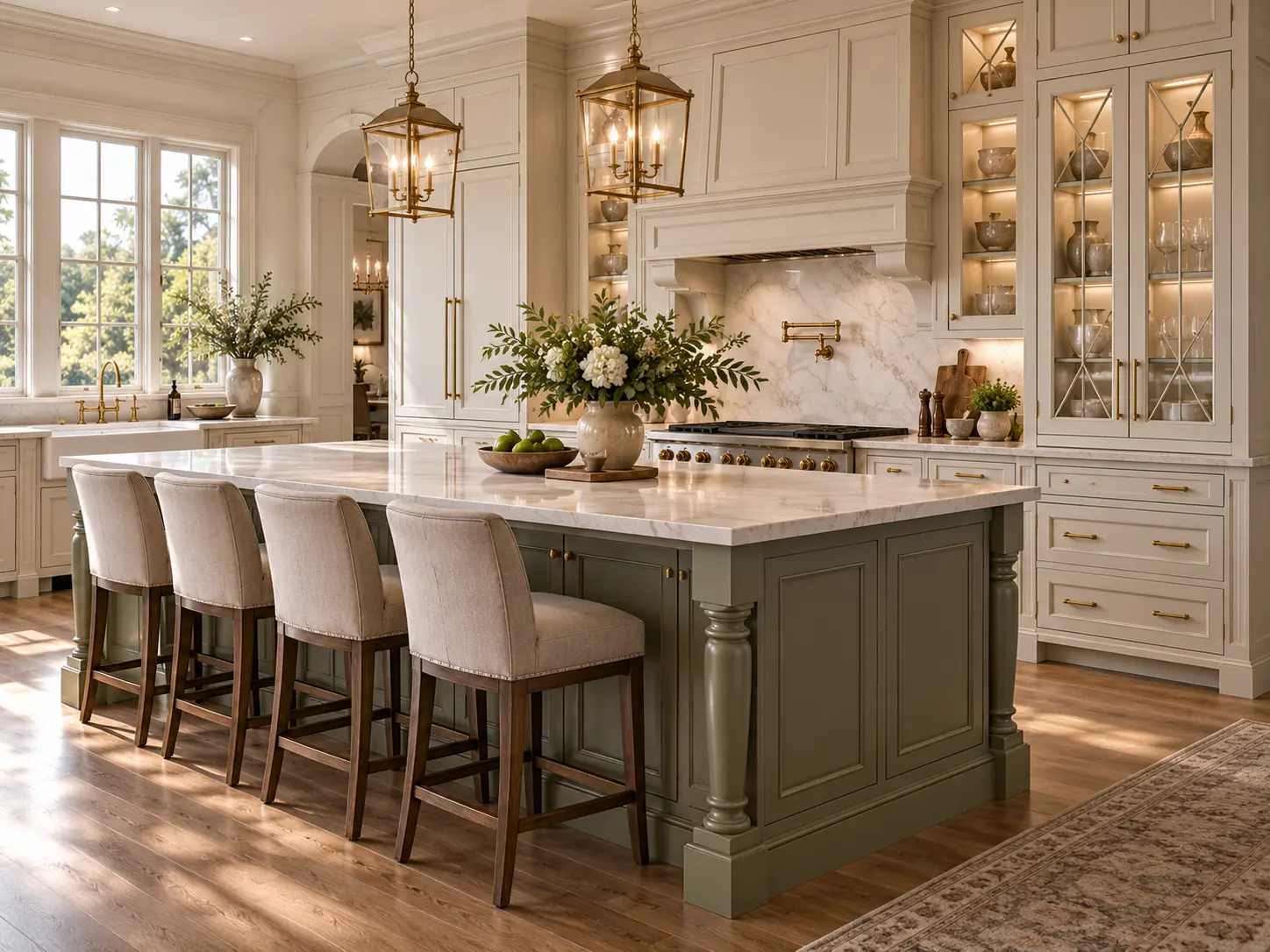
A raised-panel door has a center panel milled so it sits higher than the surrounding frame, often with a beveled or stepped edge that catches light differently than a flat Shaker panel. Rail and stile widths tend to run wider than Shaker — often 2.5 to 3 inches — to support the visual weight of the raised center and any applied molding along the outer edge.
Crown molding at the top of upper cabinets, light rail beneath them, and furniture-style corbels or turned legs on an island are common finishing touches. Glazing — a thin wash of contrasting color worked into the door's recesses — is sometimes added to emphasize the panel's depth, though it's an optional, more period-specific detail rather than a requirement of the style.
Construction is most often framed, since a face frame gives the crown, light rail and corbels a solid surface to attach to, and inset doors are common on higher-end traditional lines for the tight, cabinetmaker-style look the style is often going for.
Where It Fits
Traditional in Hollywood's older and classic-leaning homes
1950s Hollywood Lakes and Hollywood Hills homes
Original cove ceilings, arched doorways and hardwood floors in these homes pair naturally with raised-panel cabinetry rather than a stripped-down contemporary kitchen that can feel out of step with the rest of the house.
Larger Emerald Hills family kitchens
Bigger rooms have the wall space to support crown molding, a furniture-style island and a range hood surround without the details feeling cramped, which is part of why traditional tends to suit larger footprints better than tight condo galleys.
Honest Tradeoffs
What to weigh with a traditional kitchen
Strengths
- Complements original architectural detail in older Hollywood homes rather than fighting it.
- Furniture-style islands and hutches can double as a visual focal point.
- Warm stains and glazes hide minor wear and daily use well.
Considerations
- Applied molding and raised panels generally cost more than flat Shaker or slab doors in the same cabinet line.
- Recessed profile edges need slightly more frequent cleaning than a flat surface.
- A heavy traditional kitchen can feel out of scale in a smaller condo footprint.
Pairings
Hardware, countertops and storage
Hardware
Cup pulls, ring pulls and ornate knobs in aged or polished brass are the most common choice, often mixed — knobs on doors, cup pulls on drawers — to echo classic cabinetmaker conventions.
Countertops
Marble and marble-look quartz in warm veining, or granite in earthy tones, generally suit the visual weight of raised-panel doors better than a very plain, minimal quartz slab.
Storage & layout
Furniture-style hutch cabinets, plate racks and glass-front display uppers are common in traditional layouts, alongside the same pull-out and roll-out storage accessories used in any other style.
Style Reference
Traditional detail in context
Answers
Frequently Asked Questions
- What separates traditional cabinets from Shaker or transitional?
- Traditional cabinetry uses raised-panel doors — a center panel that sits proud of the frame rather than recessed flat — often with applied moldings, decorative corbels, furniture-style feet on islands, and glazed or distressed finishes. Shaker's flat panel and transitional's blend of simple lines with a few classic details are both quieter than a full traditional kitchen.
- Are raised-panel doors harder to keep clean?
- They take a little more attention. The recesses around a raised panel and any applied molding create grooves that collect dust and grease more than a flat door does, so a traditional kitchen benefits from a light wipe-down of profile edges more often than a slab or Shaker kitchen would.
- Can a traditional kitchen still feel current rather than dated?
- Yes, largely through restraint in color and finish. A traditional raised-panel door in a soft neutral paint with simple brass hardware reads classic without feeling heavy, while the same door in dark stain with ornate glazing and multiple molding layers reads more overtly period-specific.
- Does traditional cabinetry work in a 1950s Hollywood Lakes home?
- It often works very well, since these homes frequently have some original architectural detail — cove ceilings, arched openings — that pairs naturally with a raised-panel kitchen rather than a stripped-down contemporary one. The kitchen doesn't need to match the house era exactly, but classic detailing tends to sit comfortably in it.
- What countertop material is most associated with traditional kitchens?
- Marble and marble-look quartz are the most common pairing, along with granite in warmer tones. These materials carry visual weight that matches the more detailed cabinetry, whereas a very plain quartz can look under-dressed next to heavy molding.
Planning New Kitchen Cabinetry?
Talk through your layout, storage priorities, cabinet level and finishes before you commit to a budget.
Call now for service availability. Please have your 5-digit ZIP code ready.