
Cabinet Style
Two-Tone Kitchen Cabinets
Add visual depth and personality to your kitchen without sacrificing balance. A well-planned two-tone strategy anchors your space and creates a focal point.
Call now for service availability. Please have your 5-digit ZIP code ready.
Design Strategy
Perimeter vs. Island
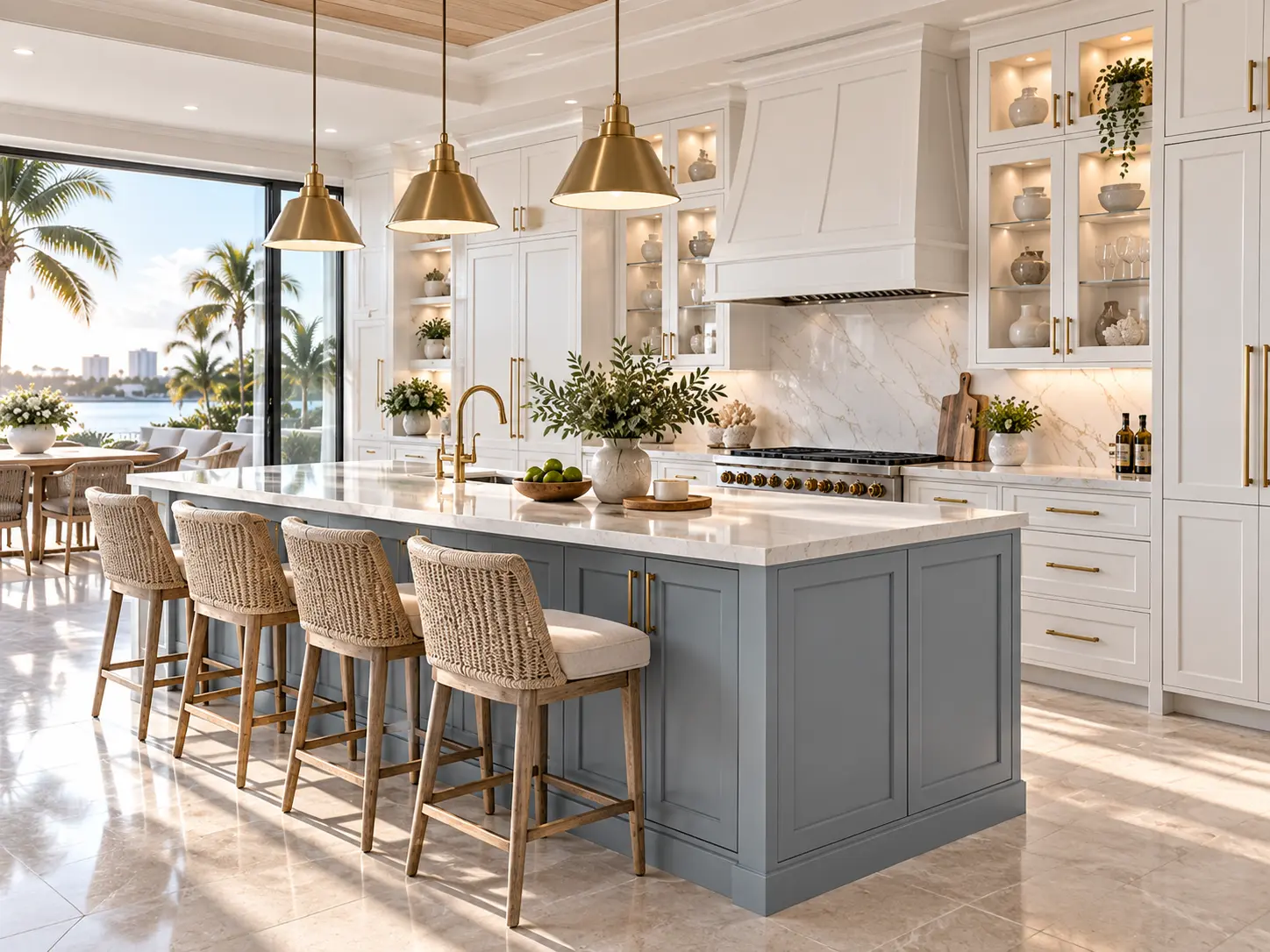
The two-tone kitchen has become a standard approach to adding interest to a room without resorting to complex architectural details. The most common and enduring strategy is the 'perimeter vs. island' split. You keep the cabinets along your walls in a neutral, light color — like soft white, cream, or light grey — to keep the room feeling large and airy. You then introduce a strong, contrasting color or a beautiful, rich wood stain on your kitchen island.
This strategy works because it treats the island as a piece of furniture that anchors the space, rather than as just another extension of the wall cabinet run. It is particularly effective in open-plan homes in Hollywood Lakes or Emerald Hills, where the kitchen is viewed from the living or dining room. The island provides a natural centerpiece that draws the eye.
Split Options
Uppers vs. Lowers
Another approach is the 'upper vs. lower' split. This is a more traditional way to achieve a two-tone look. By using a deeper color on the lower cabinets and a light, bright color on the uppers, you ground the kitchen and make the ceiling feel higher. The darker lowers hide scuffs and wear better, while the light uppers keep the line of vision open.
When choosing this split, be careful with your countertop and backsplash choices. A two-tone color scheme adds visual complexity, so a quieter, more uniform countertop often allows the cabinetry contrast to shine. You don't want the kitchen to feel busy by having too many patterns competing for attention.
Longevity
Choosing Combinations That Age Well
The biggest risk with a two-tone kitchen is picking colors that are purely trend-driven. If you choose colors that look great for one season but feel dated quickly, you’ll tire of your kitchen sooner than you’d like. The pairings that have the most staying power are usually neutral-based, such as white-and-wood, navy-and-cream, or black-and-oak.
When you see a two-tone kitchen you love, look closely at how the colors play together. Is there a balance between warm and cool tones? Do the two colors share the same intensity? The safest way to decide is with physical samples viewed in your own kitchen, at different times of day, so the contrast you liked in a brochure is the contrast you actually get in that room’s light.
Answers
Frequently Asked Questions
- Is a two-tone kitchen going to look dated in a few years?
- Like any design choice, it depends on the execution. When the contrast is based on solid, neutral pairings — like a warm wood island with white perimeter cabinets — it tends to age well. The risk is picking two trendy, volatile colors that go out of style quickly. Stick to classic color pairings if you're concerned about longevity.
- What is the most common way to do two-tone cabinetry?
- The most successful and timeless approach is a neutral white or light gray on the perimeter, with a bolder, contrasting color or a rich wood stain on the kitchen island. This anchors the kitchen without overwhelming the space, especially in smaller or open-plan homes.
- Can I do two-tone on upper and lower cabinets?
- Yes, this is another classic approach. Usually, the lower cabinets get the darker or more saturated color, which grounds the space, while the upper cabinets remain white or a very light neutral to keep the room feeling open. Reversing this — dark uppers and light lowers — is much rarer and requires a very specific design intent to pull off.
- Should the hardware match on both cabinet colors?
- Not necessarily. While keeping hardware finish consistent across the whole kitchen is the simplest way to tie a two-tone look together, you can also vary the hardware to highlight the different cabinet finishes. Just ensure the hardware designs themselves share a common thread, such as all being modern or all being traditional.
- How do I choose two colors that work well together?
- Think about the light in your kitchen. If you want a bold contrast, pair a deep, cool tone (like navy or charcoal) with a warm neutral (like cream or wood). If you prefer a subtle look, stick to two tones within the same color family, just with different saturation levels. Always look at large-scale physical samples in your home's own light.
Planning New Kitchen Cabinetry?
Talk through your layout, storage priorities, cabinet level and finishes before you commit to a budget.
Call now for service availability. Please have your 5-digit ZIP code ready.