
Finishes Guide
Kitchen Cabinet Finishes: Paint, Stain, Laminate and Lacquer
The finish is what your hand actually touches every day. This guide compares the common finish categories on durability, maintenance and how they age — separate from door material or cabinet tier.
Call now for service availability. Please have your 5-digit ZIP code ready.
The Options
Common cabinet finish categories
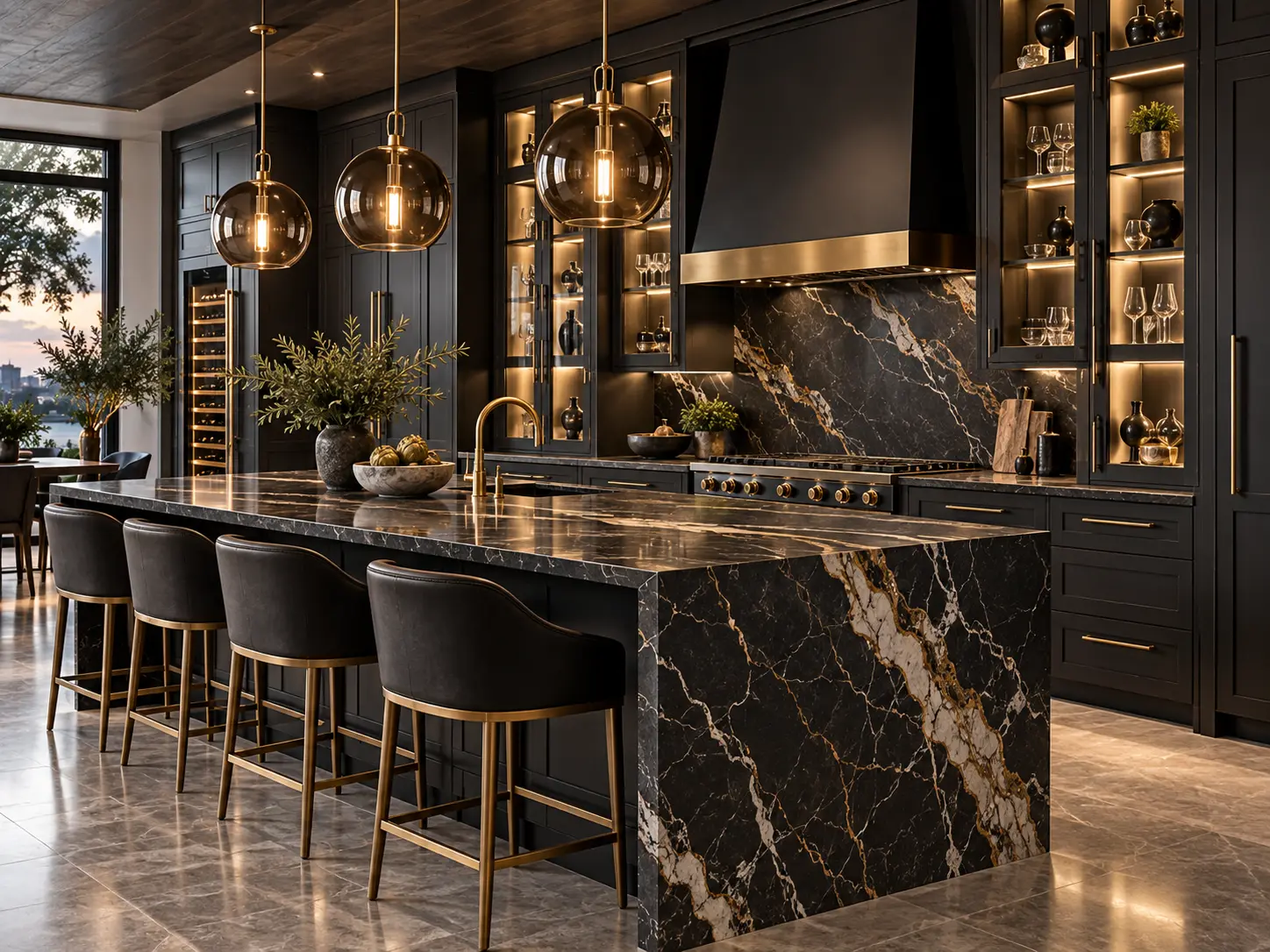
Painted finishes are typically sprayed in a factory setting for the most even, durable result, available in nearly any color and most commonly applied over MDF doors. Stained finishes highlight the natural grain of solid wood and are sealed with a topcoat for protection; color depth can vary slightly across a large kitchen since it depends on the wood's natural variation. Laminate and thermofoil finishes are factory-applied films or sheets bonded to an engineered substrate, valued for consistency and easy cleaning. Lacquer finishes, including high-gloss options, are sprayed and cured for a glass-like surface often used in contemporary kitchens.
Comparison
Durability and upkeep by finish type
| Finish | Everyday upkeep | Visible wear pattern |
|---|---|---|
| Painted (satin/matte) | Wipes clean easily | Chips at impact corners |
| Stained wood | Wipe clean; avoid harsh solvents | Dents/dings blend into grain |
| Laminate/thermofoil | Very low maintenance | Edge lifting possible over time near heat |
| High-gloss lacquer | Shows fingerprints; frequent wiping | Fine scratches more visible |
Florida Context
Sun exposure and finish choice
Kitchens with large unshaded west-facing windows — common in many open-concept South Florida floor plans — expose cabinet finishes near that light to more UV over time than interior runs. Darker painted colors and some laminates can show subtle fading or sheen change faster under sustained direct sun than lighter colors or quality lacquers formulated for UV resistance. Where a wall of cabinetry sits in direct afternoon sun, ask your fabricator about the finish's UV rating and consider window treatments as a complementary protection measure rather than relying on the finish alone.
For a deeper look at Florida-specific durability factors including humidity and salt air, see our Florida kitchen cabinet materials guide.
Answers
Frequently Asked Questions
- Which finish shows fingerprints and smudges the most?
- High-gloss lacquer and dark matte painted finishes tend to show fingerprints and water spots more readily than mid-sheen paints or wood stains, simply because smooth, dark or reflective surfaces make marks more visible, not because the finish is less durable.
- Do painted cabinets chip more easily than stained wood?
- Painted finishes can show chips at impact points such as corners near a trash pull-out, since a chip removes a thin surface layer down to a different-colored substrate; stained wood damage often blends in more because the color runs deeper into the material.
- How often do cabinet finishes need to be redone?
- There's no fixed timeline — it depends on finish quality, kitchen use and sun exposure. A quality factory finish in a normally used kitchen can look good for many years, while high-traffic touch points may need occasional touch-up sooner.
- Is a matte or satin sheen better for hiding wear?
- Satin and matte sheens generally hide fingerprints, minor scratches and water spots better than high gloss, which is why many everyday kitchens favor them, while gloss is chosen more for its visual statement.
- Can I refinish laminate cabinets if I get tired of the color?
- Laminate is bonded to the substrate and isn't designed to be sanded and refinished the way painted or stained wood can be; changing the look typically means replacing doors or fronts rather than refinishing the existing laminate surface.
Planning New Kitchen Cabinetry?
Talk through your layout, storage priorities, cabinet level and finishes before you commit to a budget.
Call now for service availability. Please have your 5-digit ZIP code ready.