Cabinet Style
Shaker Kitchen Cabinets
The five-piece flat-panel door has become the default cabinet style in most American kitchens for a reason: it is simple to read, easy to pair with almost any countertop or hardware, and it holds up visually whether the kitchen is a 1950s Hollywood Lakes remodel or a new-build in Emerald Hills.
Call now for service availability. Please have your 5-digit ZIP code ready.
What It Actually Looks Like
Rail width, panel and reveal
Shaker is defined by proportion more than by any single material or color.
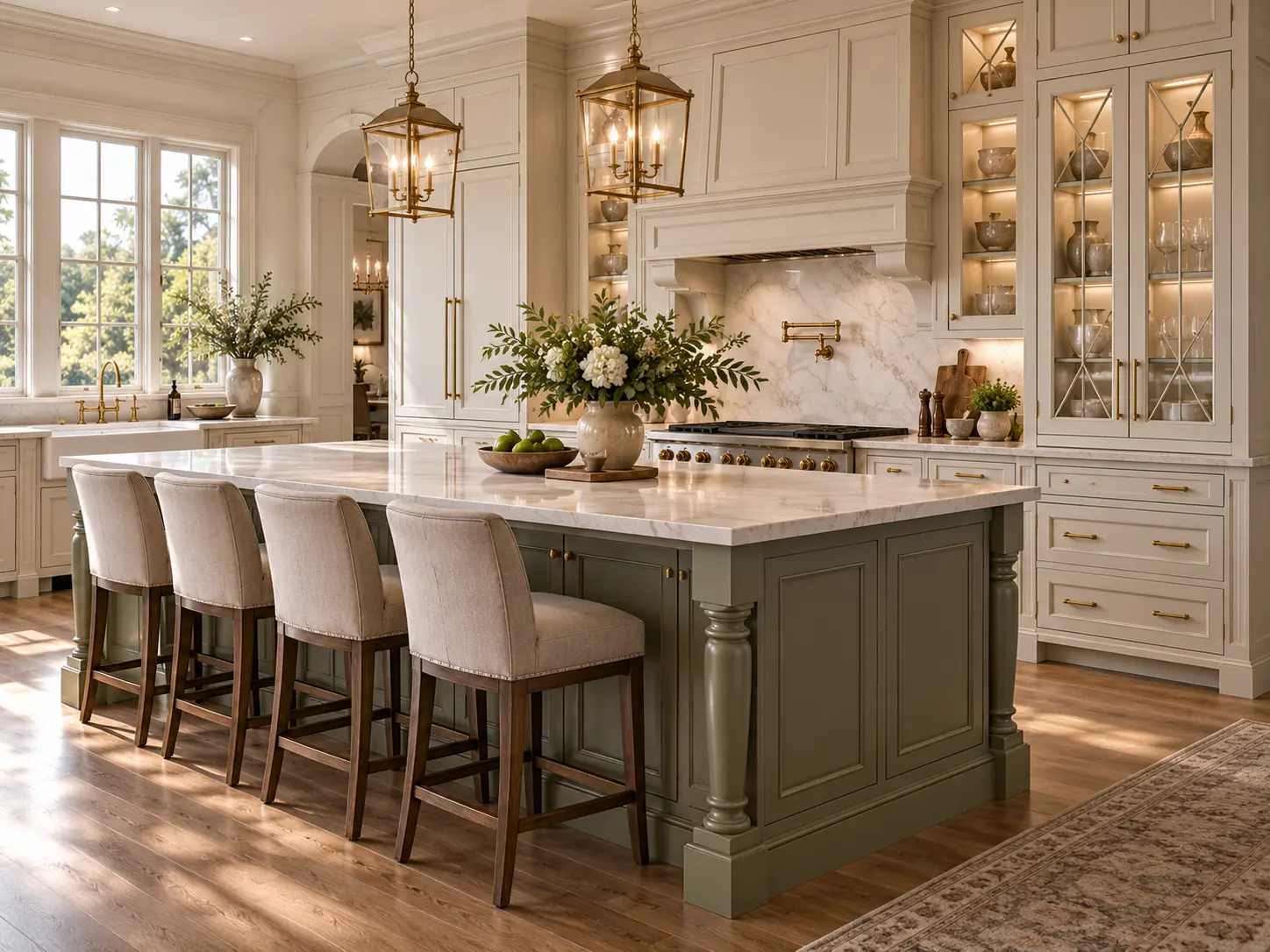
A Shaker door is built from a frame — two vertical stiles and two horizontal rails — around a flat, recessed center panel. Most cabinet lines use rail and stile widths between 2 and 2.5 inches; narrower rails read more contemporary, wider rails lean more traditional. The panel sits slightly below the face of the frame, giving the door a shallow shadow line without any applied molding or carved detail.
Reveals — the visible gap between adjacent doors and drawers on a run of cabinetry — typically run between 1/8 inch and 3/16 inch on factory-built lines, and can be tightened on higher-end custom runs. Consistent reveals are one of the clearest signs of a well-fitted kitchen; uneven gaps are usually the first thing a trained eye notices.
Construction can be framed or frameless behind that same Shaker door. A framed cabinet box has a face frame attached to the front of the cabinet, which is common in more traditional Shaker kitchens and can accept either full overlay or inset doors. A frameless box (also called full-access or European-style) skips the face frame, giving slightly more interior storage width per cabinet and a cleaner look with full overlay doors.
Materials range from painted MDF — stable, consistent, and resistant to the humidity swings common in South Florida homes — to solid poplar, maple or oak with a paint or stain finish. Paint grade MDF is the more common choice for Shaker doors in this market because it holds a crisp edge and doesn't show grain telegraphing the way stained wood can.
Where It Works
Shaker across Hollywood-area homes
1950s Hollywood Lakes houses
Shaker's simple lines suit the modest room proportions and lower ceilings common in these homes without competing with original terrazzo floors or crown detail already in the house.
Hollywood Beach condos
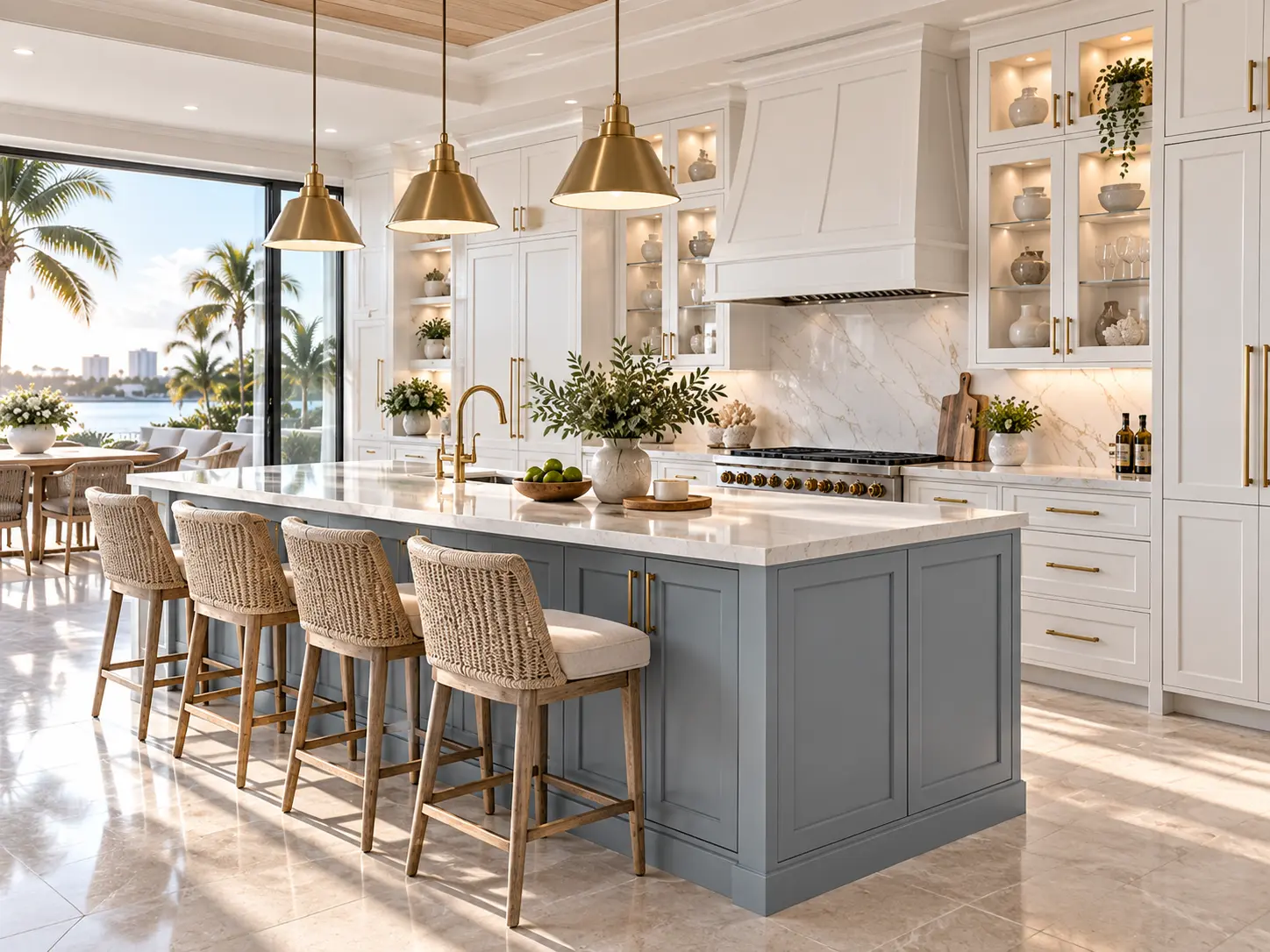
Light Shaker doors in a galley or L-shaped condo kitchen keep a compact footprint feeling open, and the flat panel is easy to wipe down in a high-humidity, salt-air environment.
Emerald Hills suburban homes
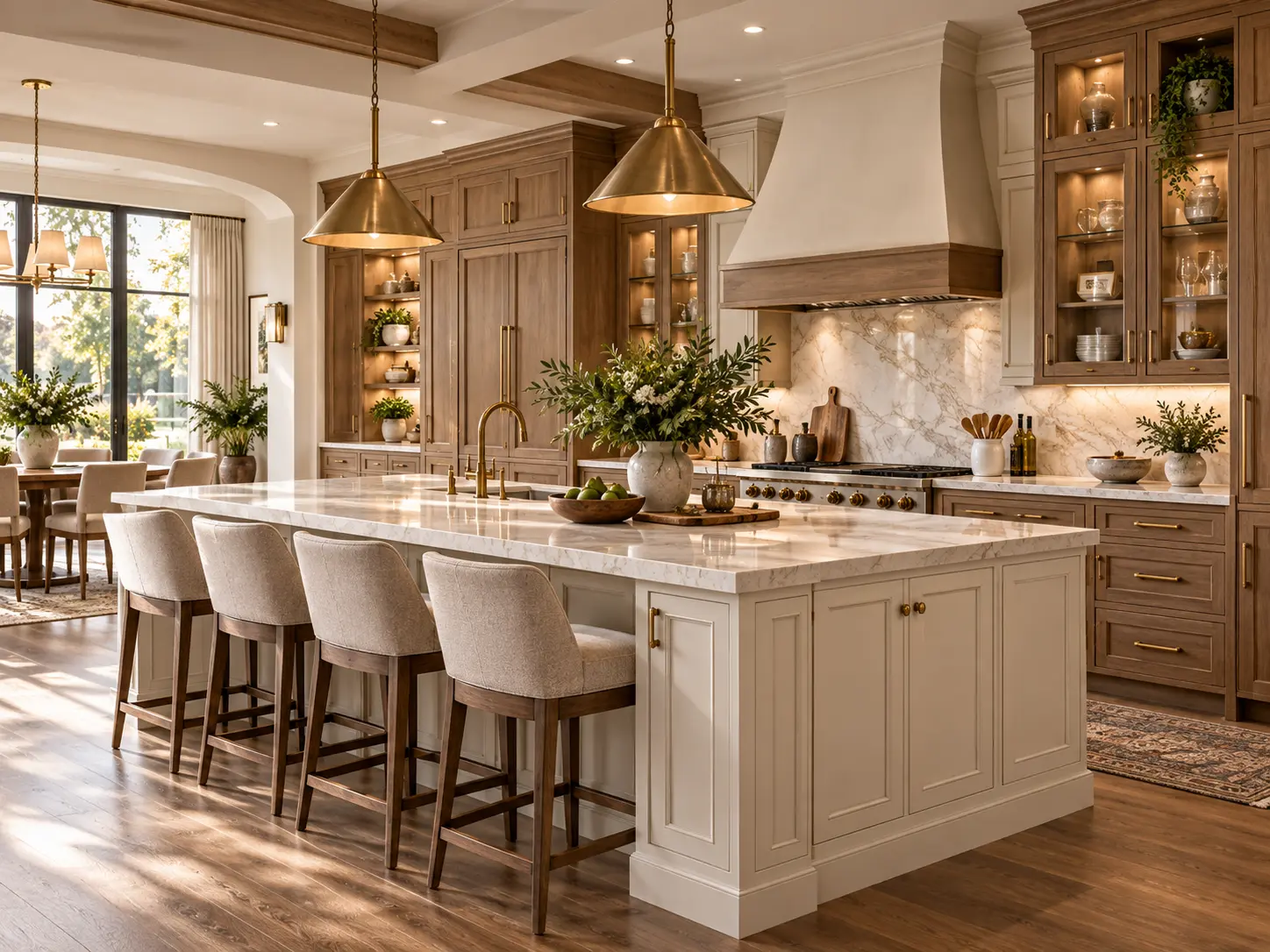
Larger kitchens with islands can use Shaker on the perimeter and a contrasting painted or stained Shaker island to add depth without switching to an entirely different door profile.
Honest Tradeoffs
Pros and considerations
Where Shaker holds up well
- Pairs with nearly any hardware, countertop and backsplash choice, which lowers decision fatigue during design.
- The flat panel is straightforward to repaint or refinish later without matching a complex profile.
- Reads as neutral rather than trend-driven, which tends to help at resale.
- Available across nearly every cabinet level — stock, semi-custom and custom.
Worth weighing first
- Because it is so common, a plain Shaker kitchen can look generic without some contrast in color, hardware or countertop.
- Painted MDF Shaker doors can chip at edges over years of hard use and need touch-up eventually.
- Inset Shaker with tight reveals costs more and needs seasonal awareness — humidity swings can affect fit slightly more than on overlay doors.
Pairings
Hardware, countertops and layout
Hardware
Bar pulls in brushed brass, matte black or brushed nickel are the most common choice on full-overlay Shaker doors. Knobs on drawers with bar pulls on doors is a widely used mixed approach that adds visual variety without changing the door style itself.
Countertops
Quartz in a soft white or light gray is the most forgiving pairing with painted Shaker, since it won't compete with the door's flat panel. Marble and marble-look quartz work well on more formal, traditional-leaning Shaker kitchens.
Storage & layout
Shaker doors accept the full range of interior storage accessories — pull-out trash, spice pull-outs, roll-out trays — without any style conflict, since the storage hardware is hidden behind the door regardless of the panel profile chosen.
More Style Reference
See how Shaker compares
Answers
Frequently Asked Questions
- What makes a door style a true Shaker door?
- A Shaker door is a five-piece, flat-panel construction: two stiles, two rails and a recessed center panel, all sitting flush with no applied carving or curve. The proportions of the rail and stile — usually somewhere between 2 and 2.5 inches — are what separate a crisp Shaker look from a plain slab or a busier raised-panel door.
- Does Shaker only come in white?
- No. White and off-white are common because they read clean and sell well at resale, but Shaker doors take almost any paint or stain equally well, since the flat panel does not fight with the finish the way a raised panel or heavy profile can. Sage, navy and warm greige are all common on Shaker doors in South Florida kitchens right now.
- Is Shaker a good fit for a small condo galley kitchen?
- Generally yes. The flat panel and simple lines don't add visual weight the way ornate molding does, which helps a narrow Hollywood Beach or Downtown Hollywood condo galley feel less cramped. Light paint colors on Shaker doors also bounce available light better than dark, heavily profiled doors.
- Can Shaker doors be inset or should they be overlay?
- Both work. Full overlay Shaker is the more common and generally more budget-friendly choice, covering most of the face frame for a fuller, more contemporary look. Inset Shaker sits flush within the frame with a narrow, even reveal around each door and is closer to a traditional cabinetmaker look, but it costs more because the tolerances are tighter.
- What hardware works best with Shaker doors?
- Shaker doors read well with almost any hardware style because the door itself is quiet. Bar pulls in brushed brass or matte black are common on contemporary-leaning Shaker kitchens, while cup pulls and knobs lean more traditional. The main decision point is usually finish and scale, not shape.
- Do Shaker cabinets cost more than slab-front cabinets?
- It depends on the cabinet line and material. A painted MDF Shaker door is often comparable to or slightly less than a painted slab door, since the flat panel is simple to machine. Solid-wood Shaker doors and inset construction both push cost upward. See the cabinet cost guide for typical ranges by cabinet level.
Planning New Kitchen Cabinetry?
Talk through your layout, storage priorities, cabinet level and finishes before you commit to a budget.
Call now for service availability. Please have your 5-digit ZIP code ready.